France’s “Forward Deterrence” Vis-à-vis Russia Raises The Risk Of Nuclear War
Jun 01, 2026
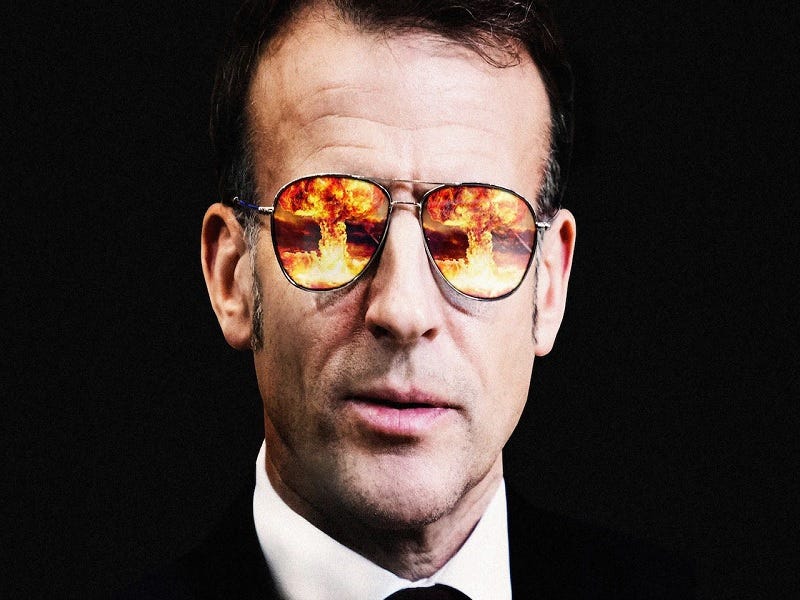
France’s planned deployment of nuclear-armed Rafale jets armed in the Arctic, Central Europe, and possibly also the Balkans poses a qualitatively new strategic threat to Russia.
The announcement in late April that France and Poland will carry out regular nuclear drills, which analysts reasonably believe are aimed against Russia (specifically Kaliningrad) and Belarus, represented the first application of what French President Emmanuel Macron has termed “forward deterrence”. It followed his speech earlier in the year where he introduced this concept, essentially the expansion of France’s nuclear umbrella over Europe, that in turn came shortly after the expiry of the New START.
The Telegraph detailed what Macron had in mind in their article about “How France took the nuclear option to make Putin think twice”. Rafale jets armed with tactical nukes will deploy not only to Poland, but likely also to the Netherlands, Belgium, Greece, Sweden, Denmark, and Germany, all of which showed interest in his “forward deterrence” initiative. The day after their article was published, Norway announced that it’ll participate in this initiative, thus likely holding regular nuclear drills like Poland will.
The tactical aspect of the nukes that France envisages deploying with its Rafales all across Europe are significant, the Telegraph explains, because they form part of what its nuclear doctrine calls a “nuclear warning shot”. This refers to “a single, non-renewable, limited nuclear strike, which would most likely be aimed at a military target.” The purpose is to spook the target, understood to be Russia, into halting military operations and resorting to solely diplomatic means for resolving whatever the dispute may be.
Importantly, Romania earlier confirmed that France invited it to join the “forward deterrence” initiative, but its new president surprisingly declined the offer to host nuclear components despite already hosting French troops. If it reverses course, then French Rafales in Norway could threaten Russia’s Arctic bases with tactical nukes, its ones in Poland could threaten those in Kaliningrad and Belarus, while Romanian-based Rafales could threaten Crimea’s. This represents a qualitatively new strategic threat to Russia.
On the conventional front, the “cordon sanitaire” that’s being assembled in the Arctic-Baltic through UK-led efforts, Central Europe through Polish-led efforts, and its entire southern periphery through Turkish-led efforts would consolidate, with Turkish influence possibly stretching into Romania as foreseen here. All the while, Germany and Poland are competing to build European NATO’s largest army (Poland’s is presently the largest), but Germany could pose a 1941-like threat to Russia if it ultimately pulls ahead.
These trends are incredibly dangerous for Russia since they’re all unfolding right on its doorstep. Even worse, the archetypically anti-Russian Baltic States could become emboldened by these developments into either initiating a crisis with Russia or opening up a second front in support of Ukraine if the ongoing conflict resumes sometime after its inevitable conclusion, thus risking a nuclear crisis if France reaffirms its “forward deterrence” vis-à-vis Russia. Russia might then launch a first nuclear strike against NATO.
The last time that France agreed to defend a European country, it abandoned Poland to the Nazis during the “phony war”, so precedent suggests that it might repeat this in the future. Those countries along NATO’s Eastern Flank that participate in France’s “forward deterrence” initiative like Poland does, Romania might one day, and Finland could too as well as the Baltic States, should therefore remember this in case they get any ideas about provoking Russia under the cover of France’s nuclear umbrella.
***
If you liked this post, consider subscribing – in right-hand sidebar – if you are not a subscriber already. Please forward it to anyone else you might think will benefit from it. We are at a critical point in time where we need to disseminate truth to those who have ears to hear, and be forming communities of like-minded individuals. If you want to discuss an idea or issue, contact me – see Contacts.

0 Comments